Why a Field Game Changes When the Ground Is Damp
Why a field game changes when the ground is damp: understand altered grip and ball movement, then adapt the pace and play to the surface.
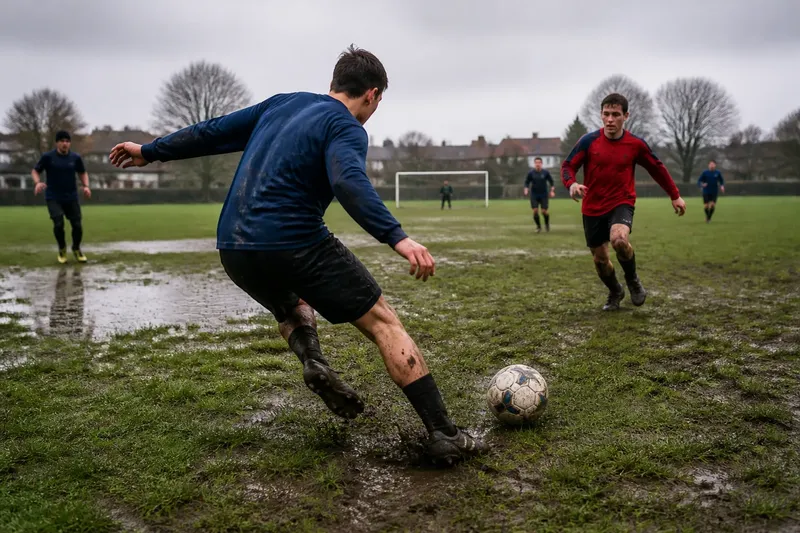
Why a field game changes when the ground is damp becomes clear as soon as a pass skids beyond a teammate or a planted foot slides at the wrong moment. A thin film of moisture can affect boots, grass and ball differently across the same field, so there is no single damp-ground rule for every game.
The useful approach is to notice what has changed, identify the likely cause and make one small adjustment at a time. That keeps a familiar match recognisable while reducing avoidable slips, misjudged passes and arguments over what the surface is doing.
Why does a damp field feel different?
Moisture changes the contact between materials. Grass blades can become slick, while soft soil may yield under a foot and offer less dependable support than firm ground. A ball may roll freely over short grass, slow in a muddy patch or hold up where water has collected.
These effects vary with the field’s drainage, grass length, soil, recent use and the type of footwear and ball. One side of a park pitch can be firm while a shaded strip near the touchline stays wet. Treat the surface as a collection of conditions, not a uniform coating.
Take a moment before play to notice puddles, bare patches, long grass and slopes. Do not assume a damp-looking field behaves the same everywhere.
A planted foot slips during a turn
A player may lose grip while changing direction, especially when the foot is planted across slick grass or on soft ground that shifts beneath it. The problem is not always a lack of effort or skill: the surface may not provide the same support as it does when dry.
First, slow the turn and shorten the stride. Encourage players to change direction with smaller movements rather than cutting sharply at full pace. If a patch repeatedly causes slips, move the game away from it when the playing area allows.
Footwear can influence grip, but do not assume one boot type suits every surface. If someone keeps sliding despite adjusting their movement, pause and reassess whether that part of the field is suitable for play.
A pass runs farther than expected
On a smooth, wet stretch of short grass, a ball may travel farther than a player expects. On longer grass or soft, waterlogged ground, it may slow abruptly instead. A pass that worked in one part of the field can therefore arrive too quickly or stop short elsewhere.
Begin by using gentle passes over a clear patch and watch the ball’s path. Then adjust the force and distance to suit what you see. Players can offer closer support so the passer has a shorter option, rather than trying to send every ball across the field.
Imagine your group starts with firm, short passes near one end, but the ball keeps running away on the slick strip beside it. Shift the play towards the more even area and ask teammates to stay available nearby; the expected result is fewer overhit passes and less chasing, without assuming the rest of the pitch will behave identically.
Why do first touches and bounces feel unpredictable?
A damp ball can arrive with a different speed or spin from the one a player expects. Meanwhile, uneven grass, soft spots and shallow ruts can change its bounce or roll. The result may look like a poor touch when the ball’s path has simply become harder to read.
Try receiving with a little more space and keeping the first touch modest. Players can let the ball settle before attempting a long pass, particularly when it has crossed visibly different ground. If a ball is coated in mud, wipe it when practical; added dirt can make its surface feel less consistent in the hand or against the foot.
Do not turn every awkward bounce into a dispute about technique. Ask where the ball changed direction, then decide whether a small adjustment or a different patch of ground makes sense.
What should you change first on damp ground?
Should everyone play more slowly?
Not necessarily: a damp surface may make a ball faster in one place and slower in another. Start with controlled movement and passes, then let players increase the pace only where the footing and ball travel seem predictable.
Should you change the ball?
Use a ball suited to the game and appropriate for the conditions, rather than assuming a different ball will solve slippery footing. Check its condition and follow the maker’s instructions for care and use.
Should you move the game to another part of the field?
Move away from a patch if it is persistently slippery, deeply soft or holding standing water. If the available space has no suitable area, choose a different activity or stop rather than asking players to adapt to ground that feels unsafe.
How can players agree on the new pace?
Say what you have noticed plainly: for example, that the ball is running long on one side or that a turn keeps slipping. Agree on one adjustment, such as shorter passes, and check whether it helps before making another change.
When should play pause?
A few misdirected passes are ordinary; repeated loss of footing is a different signal. Pause if players are sliding in the same area, struggling to stay upright or unable to move without bracing for a fall. Look for a safer patch or end the game if the whole playing area presents the same problem.
Standing water, churned mud and concealed holes can make footing unreliable. Keep players away from hazards and do not use a ball that has become damaged or unsuitable. For any question about footwear or equipment use, follow the relevant maker’s instructions and local rules.
Make one adjustment, then read the field again
When a familiar game changes on damp ground, match the response to the specific problem: shorten a pass that runs on, soften a touch that rebounds awkwardly, or move away from ground that will not hold a turning foot. Check each part of the field as play unfolds, because shaded edges and heavily used routes may behave differently from open grass.
That is the practical answer to why a field game changes when the ground is damp: surface grip and ball movement vary together, but not in a fixed pattern. Agree on a modest change, watch how the next few plays unfold and keep the game only where players can move with reasonable control.